







Search Results for: Quality Standards
A Complete Guide to Coffee Bean Grading Standards: Meanings and Characteristics of Grades Such as G1, AA, AB, and SHB from Various Origins
When purchasing single-origin coffee beans, labels such as G1, AA, and SHB often appear on the packaging. What exactly do these letters and numbers represent? They are actually coffee bean grade symbols established by each origin based on its own conditions. Due to differences in growing environments and varieties, the grading criteria of different countries vary—some look at the number of defective beans, some at green bean size, and others at hardness or altitude. In this article, Front Street Coffee will sort out the grading standards of major producing regions such as Ethiopia, Kenya, Indonesia, Central and South America, and Brazil, helping coffee lovers understand the meaning behind these grades so they can more accurately select high-quality coffee beans that suit their own taste. [more…]
Detailed Explanation of Yunnan Coffee Grade 2 Classification Standards: A Full Analysis of Physical, Chemical, and Hygiene Indicators and Quality Grades
Yunnan is a major coffee-producing region in China, and its coffee bean grading system is crucial for quality control. What tier does Special Grade 2 occupy? This article breaks down the specific requirements for Yunnan coffee beans at Special Grade 2 one by one, from appearance and sensory attributes, physical indicators, and chemical indicators to hygiene standards, including hard data such as a granule size of 7.1 mm, broken beans not exceeding 10%, and moisture content ≤12.5%. Understanding these standards not only helps you judge coffee bean quality but also helps you make wiser choices when purchasing. Front Street Coffee will also share related product information in the article, making it suitable for coffee enthusiasts who want to gain a deeper understanding of the grading logic for Yunnan beans. [more…]
Jamaica Blue Mountain Coffee Certification Standards and Authentic Price Reference: Front Street Explains Origin Rules
Jamaican Blue Mountain coffee is famous for its balanced flavor and scarce production, but what exactly are the standards for authentic beans and the pricing system? Starting from the certification standards of Front Street Jamaican Blue Mountain coffee, this article reviews the Jamaican government's quality control journey since 1944, the list of five officially certified processing plants, and the complete process of Blue Mountain coffee from hand-picking to barrel shipping. It also analyzes the medium-roast characteristics and flavor performance of Front Street Blue Mountain coffee beans, and compares global production and market conditions, helping coffee lovers distinguish authentic Blue Mountain from imitation blended beans. [more…]
Yunnan Coffee Bean Grading System and Flavor Analysis: From Rating Standards to Front Street Specialty Recommendations
As an agricultural product, coffee inevitably varies in quality, so each producing region establishes a grading system to standardize quality and provide a reference for trading. Yunnan coffee currently follows the "Green Coffee Grade Inspection Standards" released in 2019, but self-assessed standards run rampant in the market, causing grades to become disconnected from flavor. This article will systematically sort out the grading criteria for Yunnan coffee, the commonly used international and domestic standards, the varietal evolution of Arabica coffee, and introduce Front Street Coffee's experimental cultivation and product recommendations in Yunnan, finally attaching practical brewing parameters to give you a comprehensive understanding of the current state and charm of Yunnan specialty coffee. [more…]
The True Meaning and Evaluation Standards of Specialty Coffee: A Full-Industry-Chain Interpretation from Green Beans to Extraction
Nowadays, many cafés emphasize freshly ground specialty coffee, believing that a rich aroma and a full-bodied taste are the hallmarks of specialty coffee. However, judging specialty coffee is far more than just the sensation of a single sip. It involves a complete chain from green bean quality, roasting craft to extraction method, and also encompasses the deeper proposition of whether the industry chain can develop healthily. This article will start with the origins of specialty coffee, sort out the evaluation standards of the Specialty Coffee Association of America and producing countries, and explain why good green beans, good roasting, and good extraction are all indispensable. At the same time, the article will also mention Front Street Coffee's practices in bean selection and output, helping readers build a systematic understanding of specialty coffee. [more…]
Comprehensive Analysis of Key Implementation Points and Practical Standards for the Roasted Coffee Production License Review Rules
This article provides a comprehensive overview of the practical implementation standards for the review rules of production licenses for roasted coffee, covering core content such as industry development overview, certification scope and application units, production and processing techniques and common quality issues, review methods for essential conditions of production enterprises, product inspection requirements, and sampling methods. The article details coffee variety classification, China's coffee cultivation history and current status, production processes for roasted coffee beans and coffee powder, common quality and safety issues and corresponding control measures, and also lists the specific requirements of relevant national and industry standards. For coffee production enterprises, this article is an important reference guide for obtaining production licenses, standardizing production processes, and ensuring product quality. [more…]

McDonald's McCafé operating procedures under scrutiny: grounds not weighed, portafilter baskets not cleaned, quality control standards spark debate
Since McDonald's coffee brand McCafé announced increased investment in the Chinese market, its number of stores has surpassed 3,200. Its "store-within-a-store" model is equipped with semi-automatic espresso machines and dedicated baristas, focusing on a specialty coffee approach. However, recently a netizen posted pointing out that baristas at some McCafé locations operate in a highly non-standard manner: dosing the portafilter in advance, not weighing the dose, not tamping, not cleaning the steam wand, and repeatedly extracting with wet spent grounds left in the basket. Although the prices are not low, the quality of the output has raised consumer doubts. At the same time, some netizens claiming to be McCafé baristas responded that the brand has unified standards, and isolated incidents should not represent the whole. This controversy reflects the quality control and training challenges McCafé faces amid rapid expansion, and is worth the attention of coffee enthusiasts. [more…]

Why is Blue Mountain coffee so expensive? Analyzing its taste and quality through the grading system and cupping standards
The name Blue Mountain coffee is almost universally known; even before the rise of the specialty coffee movement, it was synonymous with top-tier coffee. Yet when actually tasted, many people find it merely ordinary. What exactly makes Blue Mountain coffee so expensive? Does its flavor justify its price? To answer these questions, we must start with the establishment of the Jamaica Coffee Industry Board (CIB). It was this institution that, long before the concept of specialty coffee was even born, elevated Blue Mountain coffee to a king's status through strict grading and cupping standards. This article will trace the rise to fame of Blue Mountain coffee, the rules defining its production region, its green bean grading system, and its signature balanced flavor. [more…]
A Detailed Explanation of Black Tea Grading: How to Distinguish First, Second, and Third Grades and a Comparison of Chinese and Foreign Standards
As a fully fermented tea, black tea does not have a globally unified grading system; instead, it varies by origin and standard. This article begins with the grading methods for Chinese black tea, explains how leaf size and granularity affect the grade, and compares the differences between domestic and international standards. It also explains the commercial nature of labels such as "Special Grade" and "Premium," as well as professional terms like "tea tips" and "golden needle tips." The article also mentions well-known varieties such as Keemun black tea and Congou black tea, as well as the origins of Indian and Sri Lankan black tea. By understanding this knowledge, coffee enthusiasts can also view the relationship between tea quality and grade more rationally. [more…]
A Complete Guide to Green Coffee Bean Grades: Detailed Explanation of Grading Standards and Differences Across Countries, Including AA, G1, SHB, PB, and More
When buying coffee beans, have you ever been baffled by combinations of letters like AA, G1, SHB, and PB? They may seem to follow no pattern at all, but in fact each one represents the green bean grading standard of a different producing country. Why do coffee beans need to be graded? Why is there no unified global standard? This article will take you through the origins of green coffee bean grading, and how producing regions such as Ethiopia, Kenya, the Central American countries, Jamaica, and Brazil classify their beans based on defect rate, bean size, growing altitude, and cup quality. At the same time, we will also explore what these grades actually mean in the roasted coffee market, and recommend several Front Street Coffee beans corresponding to these grades, to help you better understand the cup of coffee in your hands. [more…]
An Analysis of the Differences in Picking Standards Between Tieguanyin and Phoenix Dancong: Classification of Tea Leaf Maturity from Unopened to Fully Opened
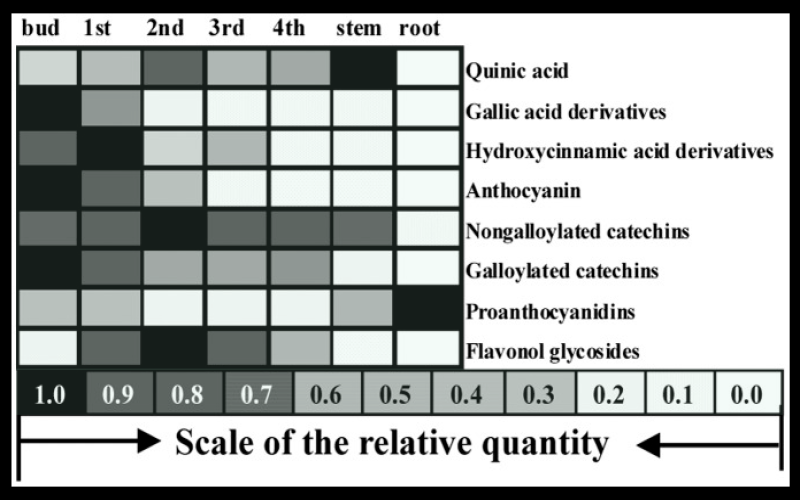
In tea leaf harvesting, besides the common one bud with two leaves and one bud with three leaves, there is also a classification based on the degree of opening of the new shoot's terminal bud: unopened, small open-face, medium open-face, and large open-face. The purpose of open-face picking is to enrich the tea's internal substances, thereby improving the quality of the finished tea. Different degrees of opening correspond to different levels of maturity, affecting the difficulty of leaf processing and the flavor of the finished tea: older leaves are easier to process, with a mellow taste and high aroma; tender leaves are harder to process, prone to a bitter aftertaste but with a strong flavor and good durability for multiple infusions. Oolong teas such as Phoenix Dan Cong and Tieguanyin have their own preferences for open-face standards, and high-quality black tea raw materials often use open-face leaves as well. In this article, Front Street Coffee combines changes in tea chemical composition to clarify for you the differences in picking standards between Tieguanyin and Phoenix Dan Cong. [more…]

What's the difference between commercial coffee beans and specialty coffee beans? From grading standards to taste evaluation, explained clearly in one go
People who drink coffee regularly may have heard terms like industrial coffee, commercial coffee, and specialty coffee, but by what standards are they actually classified, and how do they differ in taste and use? This article starts with the varietal composition of coffee beans, sorts out the definitions and main uses of the three categories, and further introduces evaluation methods for specialty coffee such as growing altitude, screen size, and defect bean ratio, as well as the higher standards represented by estate coffee. The article also discusses how consumers can determine which tier the coffee they drink falls into, and recommends several commercial and single-origin beans from Front Street Coffee with outstanding value for money, suitable for enthusiasts who want a systematic understanding of coffee grading. [more…]
Analysis of Brazil's Three Major Coffee Bean Grading Systems and Export Standards, Plus Front Street Brand Flavor and Quality Recommendations
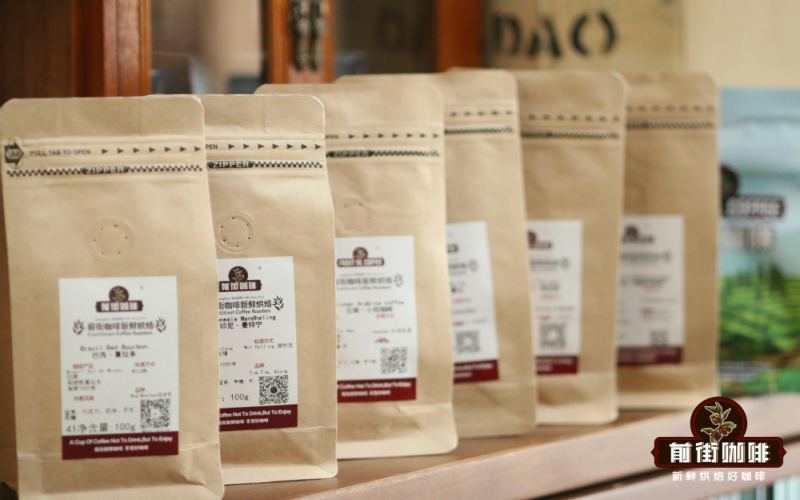
As the world's largest coffee producer, Brazil has a uniquely distinctive grading system that combines three criteria—defect rate, screen size, and cupping flavor—which sets it apart from the single-criteria grading methods used by most producing countries. By understanding the markings on a bag, such as "Brazil NY.2 SC – 17/18 FC Cerrado," you can quickly grasp a Brazilian bean's quality and origin information. This article will break down these three grading systems one by one, explain the six-tier classification standards for taste and flavor, and recommend two Brazilian specialty beans from Front Street Coffee—Queen's Farm Yellow Bourbon and Cerrado everyday drinking beans—to help coffee lovers find the Brazilian flavor that suits them. [more…]

Luckin Coffee's hygiene inspection standards spark heated debate: employees complain about strict details, how difficult is it to clean the work area?
Luckin Coffee is known for its tidy stores, but recently many employees have spoken out on social media, reporting that quality control inspection standards are overly meticulous, with strict deductions even for hard-to-reach corners such as pipes along walls and dust on chandeliers. From rusted screws on paper towel dispensers to loose threads on aprons, the tediousness of the inspection items has sparked complaints from workers, who bluntly say they are expected to "clean the prep area like an operating room." This article will sort out the focal points of the controversy over Luckin's hygiene inspections, explore whether, under existing store decoration conditions, the requirement of spotlessness is realistic, and present employees' complex attitudes toward food hygiene inspections. [more…]
A Comprehensive Guide to Global Organic Tea Certification Systems: Differences Among EU, US, Japan and Other Standards, and Buying Tips
The core difference between organic tea and conventional tea lies in whether it has been certified by an authoritative body. EU organic regulations prohibit genetic modification and synthetic inputs, and require animals to be raised in ways that suit their species characteristics, and are regarded as the strictest threshold in the tea industry. Certifications such as Switzerland's IMO, France's Ecocert, the US USDA, Japan's JAS, India's, Canada's, China's, Australia's, and Germany's Naturland each have different emphases, with significant differences in scope of application and difficulty of obtaining them. Rainforest Alliance, UTZ, FDA, and HACCP provide supplementary assurances from the perspectives of sustainable agriculture and food safety. This article systematically sorts out the rules, authority, and market applicability of major certifications, helping coffee and tea lovers accurately identify the true meaning behind labels when making purchases. [more…]

Starbucks Con Panna actually served in a large paper cup? Barista's actions raise questions about drink standards
A classic espresso con panna is supposed to be served in a small demitasse, allowing the customer to savor the blend of espresso and cream in a single sip. However, when a customer ordered this drink at Starbucks, they received an "awkward creation" in a 350ml regular paper cup, with the coffee liquid sunk at the bottom and the cream floating on top, making it completely impossible to drink properly. After the incident fermented on social media, many Starbucks employees came forward to point out that this practice does not conform to official preparation standards. Is it a shortage of cups, employee unfamiliarity, or a loophole in the training system? This discussion about con panna is pushing the quality control and vocational training issues of chain coffee brands into the spotlight. [more…]
A Detailed Explanation of Green Coffee Bean Grading Standards: What's Behind Ethiopia G1, Kenya AA, Blue Mountain No.1, and SHB Grades?
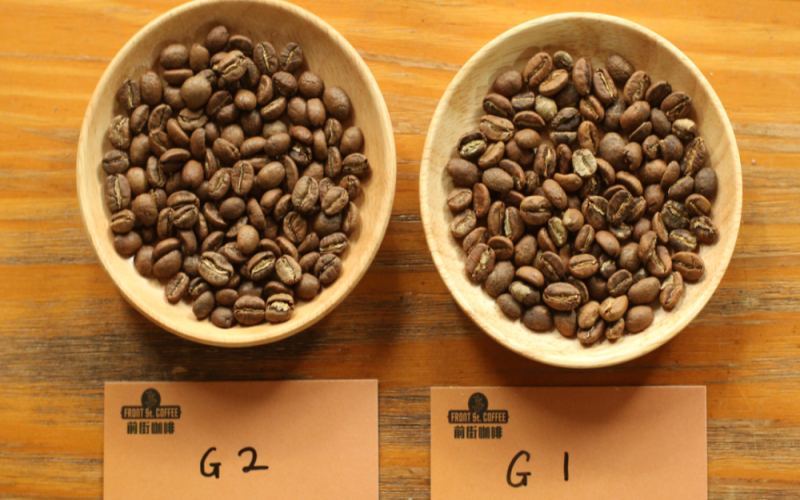
Coffee enthusiasts often ask in the shop exactly what the difference is between Ethiopia's G1 and G2, what Kenya AA actually means, and what Costa Rica's SHB grade signifies. These combinations of letters and numbers actually reflect how each producing country evaluates the quality of green coffee beans. Due to differences in history, trade, climate, and terrain, different origins have developed their own grading systems, with evaluation criteria covering multiple dimensions such as defect percentage, bean size, growing altitude, green bean density, and processing method. This article will systematically sort out the origins of coffee grading and introduce, one by one, the green bean grade standards of representative producing countries such as Ethiopia, Kenya, Colombia, Jamaica, Costa Rica, Panama, Guatemala, El Salvador, Honduras, and Brazil. [more…]
Why Jamaican Blue Mountain Coffee Is Revered as the King of Coffee: An In-Depth Look from Regional Standards to Ultimate Quality
Jamaican Blue Mountain coffee has long been hailed as the "King of Coffee," winning over coffee lovers worldwide with its rich, mellow flavor, moderate acidity, and silky mouthfeel. However, genuine Blue Mountain coffee is extremely scarce, with annual production of less than 900 tons, of which only about one-tenth flows to markets outside Japan. According to CIB standards, only coffee grown at elevations above 1,000 meters may bear the name "Blue Mountain," while that grown below 1,000 meters is called High Mountain coffee, and below 500 meters, Prime coffee. This article will systematically sort out the variety classifications of Jamaican coffee, the global export data and China's import situation over the past five years, and provide an in-depth analysis of why Front Street Blue Mountain coffee has become a model in the coffee world. [more…]
A Detailed Explanation of Colombian Green Coffee Bean Grading: The Meaning of Supremo and Excelso and Screen Size Standards
When purchasing Colombian coffee, what exactly do Supremo and Excelso, commonly seen on burlap sacks, represent? What is the relationship between the two? This article will systematically sort out the grading system for Colombian green coffee, interpreting one by one the specific requirements of grades such as UGQ, EP, and Supremo, from defect rates and screen sizes to FNC export standards. It will also introduce derivative grades such as Extra, Premium, and Minama, as well as the use of Product of Colombia for coffee that does not meet export standards. The article also includes an actual naming example of Front Street Coffee's Huila daily drinking beans, helping readers understand the compositional logic and traceability methods of Colombian green coffee names. [more…]

Analysis of Brazilian Coffee Bean Grading Standards and Flavor Characteristics: How to Choose the Hand-Brewed Brazilian Beans Recommended by Front Street Coffee
Brazilian coffee occupies a pivotal position in global production, but does it really count as good coffee? This article begins with the evolution of coffee consumption concepts in China, reviewing the journey from the instant coffee era to the specialty coffee wave, and then explores the common dimensions for judging coffee bean quality—price, flavor, and cupping scores. Drawing on SCA standards, it explains in detail the dividing line between specialty beans and commercial beans, and, combined with amusing anecdotes from Front Street Coffee's operations, reveals the subtle influence of price on consumers' judgments. Finally, it focuses on the grading system for Brazilian coffee beans, using specific indicators such as NY.2, Screen 18, and Good Cup as examples to show that an affordable price does not equal inferior quality, and that balanced ordinariness can also be a good cup of coffee. [more…]